Short answer
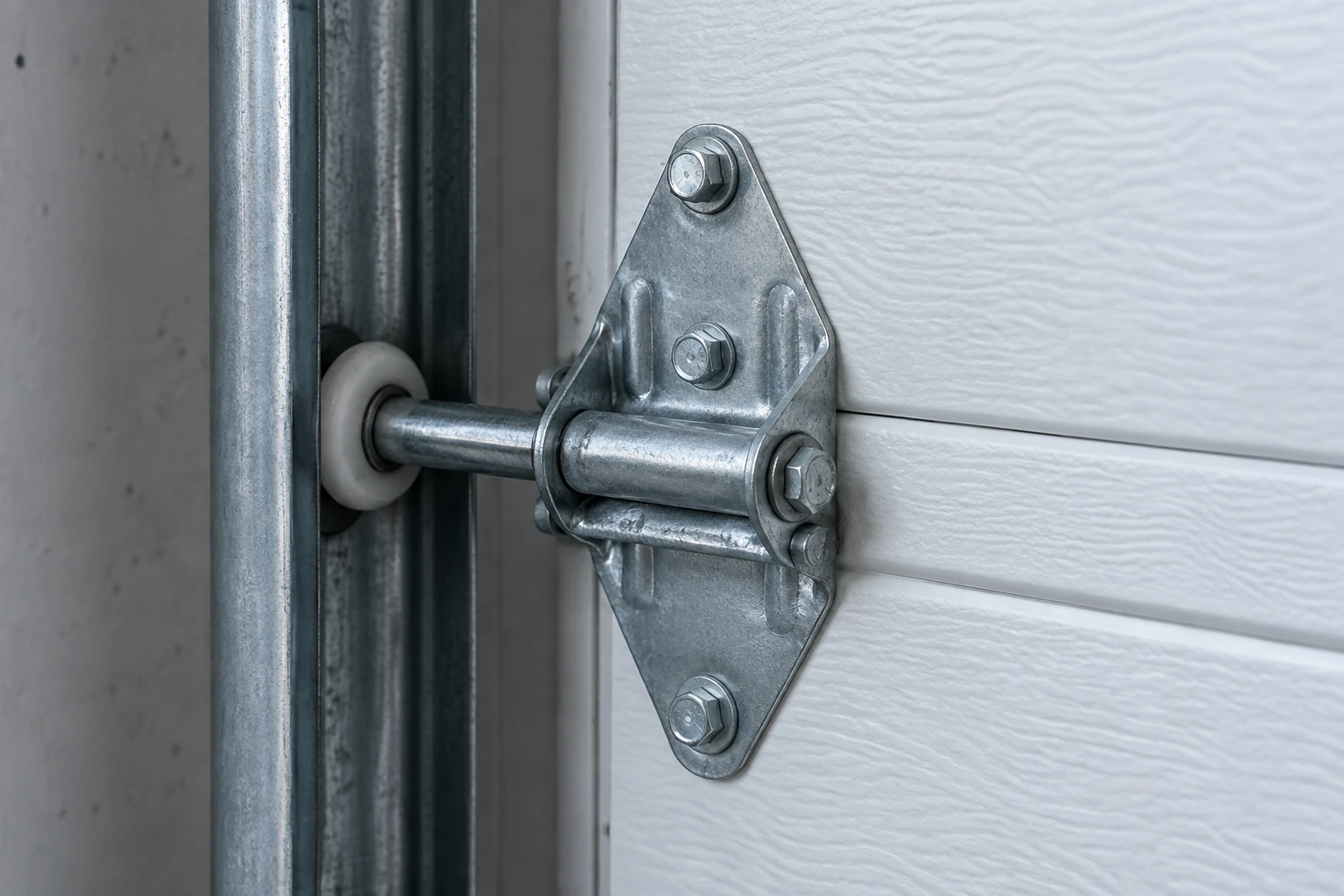
If a White Settlement garage door has developed a rattle and nothing ever hit it, the fasteners have worked loose. This city sits against Naval Air Station Joint Reserve Base Fort Worth and Lockheed Martin, and continuous low frequency energy from flight operations backs lag screws out of jamb wood a fraction of a turn at a time. Owners blame the opener because the noise seems to come from up there. It is almost always the bracket screws.
The housing in White Settlement and what it means for your door
White Settlement covers just over five square miles northwest of Fort Worth and holds about eighteen thousand people, which makes it dense without being tall. Most of the housing went up to serve the aircraft plant, so the typical home is a modest single story frame or brick house on a small regular lot, built quickly and to a practical standard. Original garages here are small, frequently single car, and many are detached at the end of a short drive. Openings are narrower and headroom lower than in postwar suburban construction elsewhere in Tarrant County. A significant number have been converted to living space or workshops over the decades. Where doors remain in service, a large share are on their second or third replacement fitted into original framing.
The door population here skews small and old in its framing even where the panels are new. Single car openings are common, often eight or nine feet wide with low headroom, so low headroom track turns up regularly and standard track will not substitute. Extension spring systems remain in service on a number of older installations, and containment cables are frequently absent on those. Detached garages often have no dedicated electrical circuit, so openers may share power with a shop outlet. Jamb backing is frequently original dimensional lumber that has softened. Where doors have been replaced, the replacement is usually a basic insulated steel panel, and it is heavier than what the original framing was built to carry, which matters for both spring sizing and mounting.
We work across White Settlement Road, Las Vegas Trail, Cherry Lane, the Naval Air Station Joint Reserve Base perimeter and the Lockheed Martin corridor, and the practical difference between those areas is larger than the map suggests. White Settlement has a population of about 18,269, and the garage doors in it range across several decades of construction standards.
What causes garage door problems in White Settlement
The city is bordered by Lockheed Martin and Naval Air Station Joint Reserve Base Fort Worth, and that is the single most important local fact for anything mechanical. Military and test aircraft operate from the field regularly, and the low frequency energy from jet operations travels through ground and structure across the whole city. Elevation is 686 feet on Tarrant County clay that moves seasonally. Aircraft plant and base traffic keeps heavy vehicle movement on the main roads, and the density of the housing means garages sit close to those routes rather than buffered behind larger lots.
What we get called out for most in White Settlement
The defining White Settlement call is fasteners that have worked loose with no impact, no overload, and no obvious cause. Owners describe a rattle that developed gradually, or a track bracket that no longer sits tight against the jamb on a door nobody has touched. Continuous vibration from base operations does that over years. The second common call is a small original garage where a modern replacement door has been fitted into 1940s framing, and the mismatch between new hardware and old mounting shows up as a door that will not stay aligned.
Consolidated Aircraft began building the B-24 Liberator here in February 1942, and the plant turned a small settlement into a defense town almost overnight. The housing built for those workers is still much of the housing stock, which is why so many garages here are small, plain, and older than the suburbs around them.
Before you call, five things worth checking
- Push every bracket where the track meets the jambWork down both sides of the door with a hand on each bracket and push firmly. Any give, any gap opening between the bracket and the wood, means the fastener has backed out or the hole has widened. Do not just tighten it. A screw spinning in an enlarged hole feels tight and holds nothing. Note which ones move, because that list is the actual repair.
- Check the bracket where the opener arm meets the top sectionThis is the single most loaded fastening on the whole assembly and the one vibration finds first. Look at where the metal arm from the ceiling rail bolts into the top panel. The bracket should sit flat with no gap and the panel around it should be flat, not dished or dimpled. Any deformation there means the panel is flexing under load and the fix is more than a tighter bolt.
- Look at whether your springs run along the side tracksOn a lot of original garages here the springs stretch back along the horizontal tracks rather than sitting on a shaft above the door. If yours do, check whether a thin cable runs through the centre of each spring and anchors at both ends. That containment cable is what holds the pieces if a spring breaks, and on installations of this age it is often missing entirely. It costs very little to add and it is the most worthwhile safety item in this city.
- Measure the space above the openingTake a tape from the top of the door opening to the ceiling or to the lowest obstruction. Garages built for aircraft plant workers were framed to the standards of their day and many have far less headroom than modern construction. Under about twelve inches means low headroom track, which is a specific part and cannot be substituted with standard track. Knowing this number before anyone orders anything saves a wasted trip.
- Press along the bottom section from the insideRun a thumb along the inside face of the lowest panel, especially the corners. Water that gets past a hardened bottom seal sits there against steel that may have no coating left after eighty years. Firm metal is fine. Metal that flexes, flakes or gives under pressure is structural corrosion, and that is the one finding that changes the conversation from repair to replacement.
Getting to your door in White Settlement
Driveways in White Settlement are short and narrow, and detached garages are commonly reached down a single width drive beside the house. Street parking is common and often leaves little room at the apron. White Settlement Road, Las Vegas Trail, and Cherry Lane carry the local traffic, and base and plant shift changes create predictable congestion on the main routes. Some streets near the base perimeter have access restrictions. Clearing the drive of vehicles matters here more than in most cities because there is frequently no alternative spot. Arrival depends on distance, traffic, and shift timing on the surrounding routes.
When garage doors fail in White Settlement
When White Settlement doors need attention Weather matters less here than in most cities on this list, because the dominant stress is constant rather than seasonal. Vibration from base operations runs all year and does not pause for winter. What the seasons add is ordinary. Summer heat expands lighter steel panels enough to change how a door sits in a track that vibration has already shifted, which is when binding shows up. Winter cold stiffens grease in old track and finds extension springs that have quietly lost tension. Spring storms drive water under bottom seals that have hardened, reaching the lowest hinges and track in detached garages first. The item worth checking on a schedule here is not weather related at all. It is the fasteners, because they loosen continuously.
What drives the price of a White Settlement job
What moves the number on a White Settlement job Parts for these doors are inexpensive and widely available, so the number is rarely driven by material. What raises it is the mounting. A track bracket that has worked loose against softened jamb wood cannot be made tight by turning the screw harder, and the elongated hole has to be addressed with sound material or proper backing before anything holds. That is real work and it is what makes a repair last. Extension spring systems missing containment cables should have them fitted, which is a small cost and a genuine improvement rather than an add on. Low headroom track is a specific part and cannot be substituted. A fair estimate separates the failed component from the mounting correction and says plainly which one has been causing the repeat visits.
What we see most in White Settlement
What constant vibration does that impact never does A garage door assembly is designed to resist the loads of a door moving up and down. Lag screws into the jamb, track bolts, hinge fasteners, and the bracket tying the opener arm into the top section are all sized for that. None of them are designed for continuous low frequency energy arriving from outside the building, which is exactly what a city bordering an active military airfield gets. The effect is slow, cumulative, and completely invisible until something rattles. Lag screws back out a fraction of a turn at a time, the holes they sit in widen, track brackets shift against the jamb, and the opener's top bracket works at its mounting until the section around it begins to flex. Owners almost always blame the opener, because the noise seems to come from up there. The productive response is a systematic fastener check across the whole assembly rather than a component replacement, and where a hole in the jamb has elongated, moving to sound material or adding backing rather than driving a larger screw into damaged wood. On a house in this city that is worth doing annually.
Working on doors in White Settlement
Fitting a modern door into 1940s framing The garages built for aircraft plant workers were sized and framed for the cars and the materials of their time. Openings are narrower, headroom is lower, and the jamb lumber is dimensional stock that has been in place for eighty years. A modern insulated steel replacement door is considerably heavier than the single skin door it replaces, and that added weight has to be answered in two places. The springs have to be sized to the new door rather than the old one, which is straightforward and often gets done. The mounting has to be able to carry it, which frequently does not. Old jamb wood that held a light door for decades can be too soft to hold the track for a heavy one, and the failure is gradual rather than immediate, showing up months later as a door that has drifted out of alignment. Before fitting a heavier door into an original White Settlement garage, the jamb and header should be assessed and reinforced where needed. Doing that at installation costs far less than correcting it after the new door has been working against loose mounting for a year.
Repair or replace, and how to tell
Repair it
Repair is the right answer on most doors in this city, and the parts are cheap. Rollers, hinges, bottom seals, track brackets and springs are all inexpensive and readily available for the sizes common here. What makes a repair last is dealing with the mounting rather than the part, because a new roller bolted into a jamb the vibration has been working on for decades will drift out of line again within the year. Correcting a widened screw hole with sound material or proper backing is the difference between a repair that holds and one that returns. Adding containment cables to an extension spring system belongs in the same visit.
Replace it
Replacement is right when corrosion has reached the bottom section, and it is more common here than owners expect on doors this old. It is also right when the opener has no photo eye sensors near the floor, because that protection cannot be retrofitted onto a unit that was never built for it, and that is a safety question rather than a repair question. One thing to plan for if you are replacing: a modern insulated door weighs considerably more than the single skin door it replaces, and eighty year old jamb lumber that held something light may not hold something heavy. The framing gets assessed and reinforced at installation, not afterwards.
What a White Settlement job actually costs
Every job is quoted after the door is looked at, never over the phone on a guess. What follows is what actually moves the number on a White Settlement job.
| Job | What it covers | What pushes it up |
|---|---|---|
| Fastener and bracket correction | going through the assembly where vibration has loosened things | how many holes have elongated, condition of the jamb lumber, backing required |
| Containment cables for extension springs | the safety item most often missing here | whether the springs themselves are also at the end of their life, pulley condition |
| Extension spring replacement | common on original garages in this city | door weight, whether pulleys and lift cables need replacing at the same time |
| Roller and hinge renewal | full set on a single or double door | door size, roller grade chosen, number of cracked hinges |
| Low headroom track | specific hardware for the older framing here | actual headroom measured, dual horizontal rail required, whether the opener also needs changing |
| Insulated door replacement | with framing reinforcement | opening size, jamb condition, springs recalculated for the heavier panel |
Garage door problem in White Settlement?
Describe what the door is doing and you will get an honest read on whether it needs a visit to White Settlement today, whether it is safe to leave until tomorrow, and roughly what is likely to be wrong with it.
Call (214) 271-8110Common questions from White Settlement
My White Settlement garage door has started rattling and nothing hit it. What causes that?
Continuous vibration from aircraft operations at the nearby base works fasteners loose over years. Lag screws holding track brackets to the jamb back out a fraction at a time, hinge fasteners loosen, and the bracket connecting the opener arm to the top section works at its mounting. No impact is required. Most people blame the opener because the noise seems to come from above. Going through the assembly fastener by fastener, starting at the jamb brackets and working up to the opener mount, is what locates it. Where a screw hole has widened, the fix is sound material or proper backing, not a bigger screw.
I want to replace my old single skin door with an insulated one. Any problem with that?
The door is fine, but the framing behind it needs checking first. An insulated steel door is considerably heavier than the single skin door it replaces, and these garages have eighty year old jamb lumber that held something much lighter. The springs will be sized to the new door, which is standard. What is often missed is whether the jamb and header can carry the added weight, because that failure is gradual and shows up months later as a door drifting out of alignment. Assess and reinforce the mounting at installation rather than afterward.
My garage door springs run along the side tracks. Is that a problem?
Not by itself. Extension springs are a legitimate design and plenty work reliably. The thing worth checking is whether a safety containment cable runs through the center of each spring and is anchored at both ends. That cable holds the pieces if a spring breaks, and on older installations in this city it is frequently missing because it was not universally required when these garages were built. It is inexpensive to add during any visit. Both springs should also show similar stretch and the pulleys should turn freely.
There is very little space above my garage door. Does that limit what I can install?
It changes the hardware rather than the door. Low headroom construction is common in this city and it uses low headroom track with dual horizontal rails instead of standard track. That is a specific part and cannot be substituted with regular track. It also narrows the opener choices, since a ceiling mounted rail needs clearance that a wall mounted jackshaft opener does not. Measure the actual headroom above the opening before ordering anything, because a standard kit arriving on site is a wasted trip.
Does the air base really affect my garage door?
Not in any dramatic way, but yes, cumulatively. A garage door assembly is bolted into wood and designed to resist the loads of a door moving up and down. It was not designed for continuous low frequency energy arriving from outside the building, which is what a city bordering an active military airfield gets. The effect is slow and invisible until something rattles. Lag screws back out fractionally, their holes widen, and brackets shift. A systematic fastener check once a year handles it completely, and it is worth doing here in a way it would not be elsewhere.
My garage was built in the 1940s. Is it worth putting a modern door on it?
Usually yes, with one condition. Modern insulated doors are quieter, better sealed and far more rigid than what these garages originally had. The catch is weight. An insulated sectional weighs considerably more than a single skin door, and the jamb lumber in these buildings has been in place for eighty years and may be soft where water has reached it. That framing has to be assessed and reinforced where needed before the new door goes on, not after. Done in that order it is a good upgrade. Skipped, the door drifts out of alignment within months and nobody understands why.
Garage door services we provide in White Settlement
Brands we repair
Electric gates in White Settlement
Separate door and opener: Garage Door Repair in White Settlement, Texas in Dallas-Fort Worth
The safest next step comes from controlled testing. For Garage Door Repair in White Settlement, Texas in Dallas-Fort Worth, the local context includes a mix of property ages, operating patterns, weather exposure, shared access, and equipment histories. The working scope centers on inspection, diagnosis, scope, safe work, operational testing, and a documented handoff. Under separate door and opener, the review covers manual movement, trolley release, motor effort, travel settings, force settings, and the symptom that started the call. A technician may first report that the bottom fixture behaves differently under load, but that statement is a starting point rather than a diagnosis. The inspection should establish what changed, which parts still function, what can be tested safely, and what result the customer expects. A complete handoff shows what changed and how to verify it. Conditions across Dallas-Fort Worth influence materials, access, weather exposure, and scheduling, so the final recommendation should follow the actual property. 24/7 Dallas Garage Door Repair explains the work, records important limitations, and asks the customer to verify the finished operation before the visit closes.
The visible symptom is only the first clue. For Garage Door Repair in White Settlement, Texas in Dallas-Fort Worth, the local context includes a mix of property ages, operating patterns, weather exposure, shared access, and equipment histories. The working scope centers on inspection, diagnosis, scope, safe work, operational testing, and a documented handoff. Under separate door and opener, the review covers manual movement, trolley release, motor effort, travel settings, force settings, and the symptom that started the call. A property manager may first report that the opener rail has an uncertain service history, but that statement is a starting point rather than a diagnosis. The inspection should establish what changed, which parts still function, what can be tested safely, and what result the customer expects. The result is easier to test and easier to document. Conditions across Dallas-Fort Worth influence materials, access, weather exposure, and scheduling, so the final recommendation should follow the actual property. 24/7 Dallas Garage Door Repair explains the work, records important limitations, and asks the customer to verify the finished operation before the visit closes.
Match parts to the door: Garage Door Repair in White Settlement, Texas in Dallas-Fort Worth
Every property adds a different operating pattern. For Garage Door Repair in White Settlement, Texas in Dallas-Fort Worth, the local context includes a mix of property ages, operating patterns, weather exposure, shared access, and equipment histories. The working scope centers on inspection, diagnosis, scope, safe work, operational testing, and a documented handoff. Under match parts to the door, the review covers weight, height, track radius, headroom, shaft layout, manufacturer details, and compatible replacement hardware. A installer may first report that the photo-eye circuit needs a documented baseline, but that statement is a starting point rather than a diagnosis. The inspection should establish what changed, which parts still function, what can be tested safely, and what result the customer expects. This approach keeps safety, function, and cost in the same conversation. Conditions across Dallas-Fort Worth influence materials, access, weather exposure, and scheduling, so the final recommendation should follow the actual property. 24/7 Dallas Garage Door Repair explains the work, records important limitations, and asks the customer to verify the finished operation before the visit closes.
Good service starts by separating cause from coincidence. For Garage Door Repair in White Settlement, Texas in Dallas-Fort Worth, the local context includes a mix of property ages, operating patterns, weather exposure, shared access, and equipment histories. The working scope centers on inspection, diagnosis, scope, safe work, operational testing, and a documented handoff. Under match parts to the door, the review covers weight, height, track radius, headroom, shaft layout, manufacturer details, and compatible replacement hardware. A homeowner may first report that the sectional door serves several users, but that statement is a starting point rather than a diagnosis. The inspection should establish what changed, which parts still function, what can be tested safely, and what result the customer expects. That distinction matters when several people share responsibility for the property. Conditions across Dallas-Fort Worth influence materials, access, weather exposure, and scheduling, so the final recommendation should follow the actual property. 24/7 Dallas Garage Door Repair explains the work, records important limitations, and asks the customer to verify the finished operation before the visit closes.
A useful question before approving this step
Ask what observation supports the recommendation, which parts are included, which parts are outside the scope, how the result will be tested, and what documentation you will receive. Call (214) 271-8110 to describe the property and schedule work within Dallas-Fort Worth.
Complete the handoff: Garage Door Repair in White Settlement, Texas in Dallas-Fort Worth
A careful scope protects both the equipment and the customer. For Garage Door Repair in White Settlement, Texas in Dallas-Fort Worth, the local context includes a mix of property ages, operating patterns, weather exposure, shared access, and equipment histories. The working scope centers on inspection, diagnosis, scope, safe work, operational testing, and a documented handoff. Under complete the handoff, the review covers manual release, remote controls, keypad access, safety tests, maintenance notes, and ownership of connected accounts. A technician may first report that the sectional door serves several users, but that statement is a starting point rather than a diagnosis. The inspection should establish what changed, which parts still function, what can be tested safely, and what result the customer expects. It also gives the customer a clear way to compare the available options. Conditions across Dallas-Fort Worth influence materials, access, weather exposure, and scheduling, so the final recommendation should follow the actual property. 24/7 Dallas Garage Door Repair explains the work, records important limitations, and asks the customer to verify the finished operation before the visit closes.
The final test matters as much as the first inspection. For Garage Door Repair in White Settlement, Texas in Dallas-Fort Worth, the local context includes a mix of property ages, operating patterns, weather exposure, shared access, and equipment histories. The working scope centers on inspection, diagnosis, scope, safe work, operational testing, and a documented handoff. Under complete the handoff, the review covers manual release, remote controls, keypad access, safety tests, maintenance notes, and ownership of connected accounts. A installer may first report that the opener rail has an uncertain service history, but that statement is a starting point rather than a diagnosis. The inspection should establish what changed, which parts still function, what can be tested safely, and what result the customer expects. The technician can then explain what belongs in the current job and what can wait. Conditions across Dallas-Fort Worth influence materials, access, weather exposure, and scheduling, so the final recommendation should follow the actual property. 24/7 Dallas Garage Door Repair explains the work, records important limitations, and asks the customer to verify the finished operation before the visit closes.
Check safety reversal: Garage Door Repair in White Settlement, Texas in Dallas-Fort Worth
Small alignment and maintenance details often explain large symptoms. For Garage Door Repair in White Settlement, Texas in Dallas-Fort Worth, the local context includes a mix of property ages, operating patterns, weather exposure, shared access, and equipment histories. The working scope centers on inspection, diagnosis, scope, safe work, operational testing, and a documented handoff. Under check safety reversal, the review covers photo-eye position, wiring, obstruction response, closing force, travel limits, and testing after adjustment. A installer may first report that the cable drum has been exposed to moisture, but that statement is a starting point rather than a diagnosis. The inspection should establish what changed, which parts still function, what can be tested safely, and what result the customer expects. That sequence keeps the recommendation tied to evidence. Conditions across Dallas-Fort Worth influence materials, access, weather exposure, and scheduling, so the final recommendation should follow the actual property. 24/7 Dallas Garage Door Repair explains the work, records important limitations, and asks the customer to verify the finished operation before the visit closes.
A reliable plan begins with a physical check. For Garage Door Repair in White Settlement, Texas in Dallas-Fort Worth, the local context includes a mix of property ages, operating patterns, weather exposure, shared access, and equipment histories. The working scope centers on inspection, diagnosis, scope, safe work, operational testing, and a documented handoff. Under check safety reversal, the review covers photo-eye position, wiring, obstruction response, closing force, travel limits, and testing after adjustment. A technician may first report that the spring shaft shows uneven wear, but that statement is a starting point rather than a diagnosis. The inspection should establish what changed, which parts still function, what can be tested safely, and what result the customer expects. This prevents one worn part from hiding a larger operating problem. Conditions across Dallas-Fort Worth influence materials, access, weather exposure, and scheduling, so the final recommendation should follow the actual property. 24/7 Dallas Garage Door Repair explains the work, records important limitations, and asks the customer to verify the finished operation before the visit closes.