The housing in Trophy Club and what it means for your door
Trophy Club was laid out in 1973 as a master planned community wrapped around a country club, and the town still reads that way on the ground. It covers only 4.1 square miles, so almost nothing here was built by accident or filled in piecemeal. The original sections hold larger single family homes on golf course frontage and interior lots, most with attached two and three car garages, many with a separate narrow bay added for a golf cart. Later phases, including The Highlands, brought newer construction with wider openings and insulated doors. The result is two clear generations of housing rather than a gradual spread, and a garage door population that reflects exactly that split.
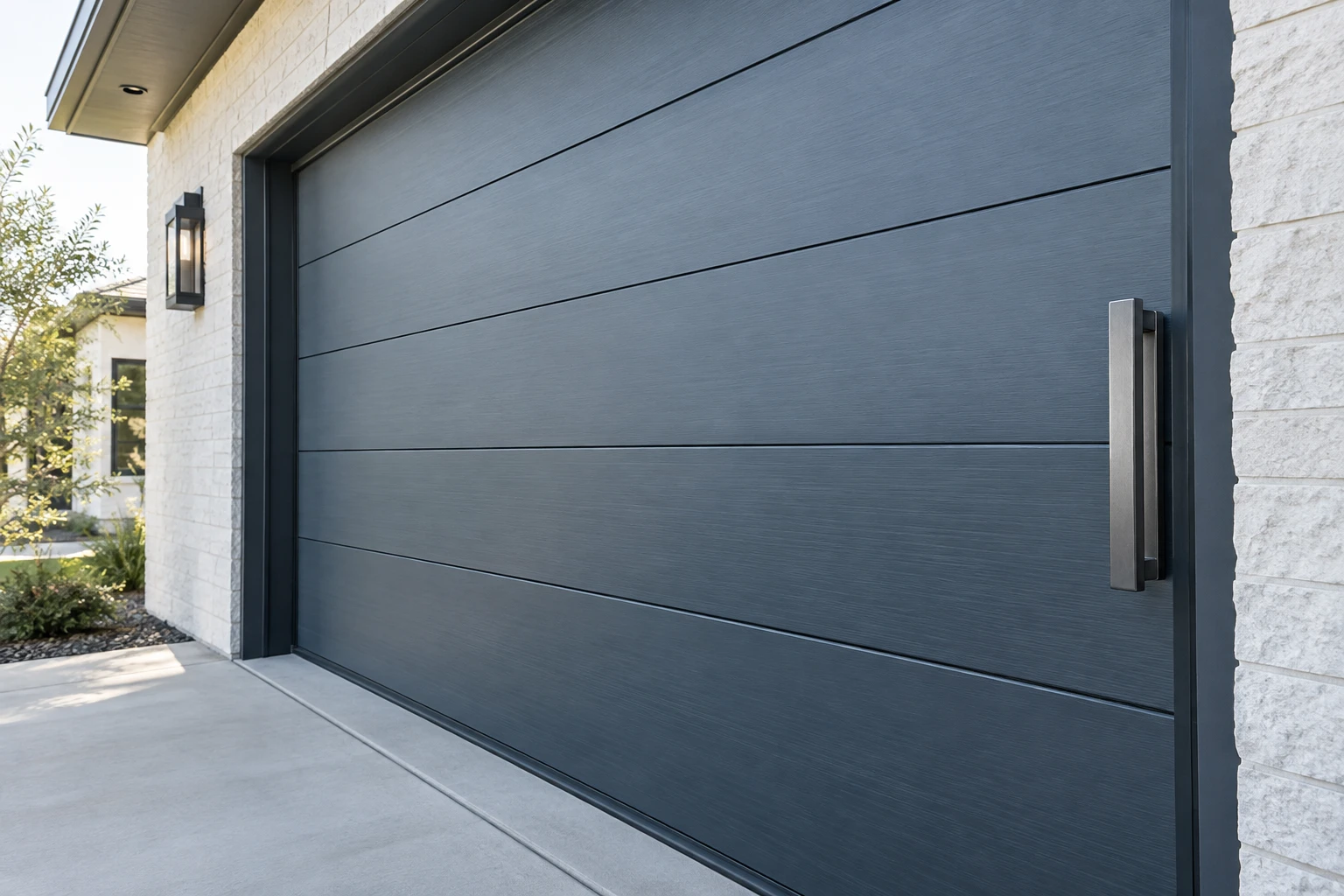
Trophy Club has two distinct door populations. Original section homes typically have doors replaced once or twice over the life of the house, often with better panels than the framing behind them. Low headroom is common in 1970s construction, so low headroom track and dual horizontal rails turn up frequently, and those setups are not interchangeable with standard track. Golf cart bays use narrow single doors, often six or seven feet wide, that cycle several times a day and wear far faster than the main door beside them. Newer Highlands construction uses wider insulated doubles with belt drive or wall mounted openers. Across both generations, HOA and architectural standards govern the visible face of any replacement, so panel style, color, and window layout have to match what was approved.
We work across The Highlands at Trophy Club, Trophy Club Country Club, the Trophy Wood District, Trophy Club Drive and the Marshall Creek side, and the practical difference between those areas is larger than the map suggests. Trophy Club has a population of about 13,688, and the garage doors in it range across several decades of construction standards.
What causes garage door problems in Trophy Club
The town sits west of Dallas Fort Worth International Airport and south of Grapevine Lake on the Denton and Tarrant county line, with State Highway 114 running along its edge. Proximity to the lake raises humidity through the warm months, and the original settlement in this area flooded badly enough in the 1840s that the community relocated to higher ground, which tells you how water moves across this terrain. Mature landscaping across the older golf course sections keeps garages shaded and slow to dry. Aircraft traffic on approach to the airport passes overhead regularly, adding steady low frequency vibration that older fasteners feel over decades.
What we get called out for most in Trophy Club
The most frequent Trophy Club call comes from an original 1970s or 1980s section home whose door is on its second or third set of hardware but whose track, jamb backing, and header framing are still the originals. Owners describe a door that has been repaired several times and never quite settled. The underlying issue is usually that new components have been fitted to a mounting structure that has loosened over fifty years. The second common call is a golf cart bay door, which sees far more cycles per day than the main garage.
The town is built around the only golf course Ben Hogan ever designed, and it takes its name from the original plan to display Hogan's trophy collection at the country club. It incorporated in 1985, twelve years after development began, which is why some infrastructure predates the town's own building standards.
Getting to your door in Trophy Club
Driveways here are generally wide and well maintained, and the street layout is a planned network rather than a grid, so finding the right cul de sac matters more than finding room to park. Golf course frontage properties sometimes have cart paths, irrigation, and landscaping close to the drive. Trophy Club Drive is the main artery through the older sections and State Highway 114 carries the traffic in and out of the town, which slows near the airport at peak periods. Clearing vehicles and golf carts from the driveway before a visit makes a real difference on a home with a cart bay in use. Arrival depends on distance and traffic.
When garage doors fail in Trophy Club
When Trophy Club doors need attention The pattern here is driven by the age split rather than by any one weather event. Original section homes feel every seasonal swing through framing that has been moving for five decades, so a door that fits in spring can bind by August and gap again by January. Humidity off Grapevine Lake keeps shaded golf course garages damp longer after rain, which reaches lower hinges and track before it reaches anything else. Newer Highlands homes behave like any modern construction, with summer heat drying seals and winter cold exposing tired springs. The item most often overlooked in this town is the golf cart bay. It cycles far more often than the main door, its springs reach their rated life years sooner, and almost nobody thinks to have it checked.
What drives the price of a Trophy Club job
What moves the number on a Trophy Club job The main driver here is whether the work is a component swap or a correction of the structure behind it. On original section homes, fitting new rollers or springs to loose jamb backing and a fifty year old header does not hold, so the honest job sometimes includes restoring sound mounting before anything else will stay aligned. Low headroom track is a specific part, not a standard one, and cannot be substituted. Golf cart bay doors are small but use their own hardware sizes. On replacements, architectural approval limits the panel choices, so the match matters more than the catalog price. Newer Highlands homes are generally straightforward standard work. A fair estimate should separate the failed part from the mounting correction and say plainly which one is actually causing the repeat visits.
What we see most in Trophy Club
Why fifty year old framing outlasts three sets of hardware A garage door assembly is bolted and lagged into wood. The vertical track fastens to the jamb, the horizontal track hangs from the ceiling framing, and the opener bracket ties into the header and the top section. All of that was installed once, in the 1970s, and has never been touched while doors, springs, rollers and openers have each been replaced around it. Over that many decades, lag screws back out fractionally under load and vibration, jamb wood softens where moisture has reached it, and the holes those fasteners sit in elongate. New hardware bolted into that produces a door that is technically correct and still will not stay aligned. The tell is a Trophy Club homeowner who says the door has been fixed three times and still rubs. The correct approach is to check the mounting structure before replacing another component, and where a fastener hole is worn, to move to sound material or add proper backing rather than driving a larger screw into damaged wood. Doing that once ends a cycle that has often run for years.
Working on doors in Trophy Club
The golf cart bay nobody has checked A separate narrow bay for a golf cart is common in the original sections of Trophy Club, and it is the hardest working door on most of these properties. A household might open the main garage four times a day. A cart bay in a golf course home can easily see twice that during the season. Garage door springs are rated in cycles rather than years, commonly around ten thousand for standard residential coils, so a cart bay reaching eight cycles a day arrives at that number in roughly three and a half years while the main door beside it is still only halfway through its life. Owners rarely connect the two, because the doors look identical in age. These narrow doors also use their own spring sizes and lighter hardware, so a shop that assumes standard double door parts will fit the wrong thing. When the main door gets serviced here, the cart bay is worth checking at the same visit, because it is almost always further along.
Garage door problem in Trophy Club?
Describe what the door is doing and you will get an honest read on whether it needs a visit to Trophy Club today, whether it is safe to leave until tomorrow, and roughly what is likely to be wrong with it.
Call (214) 271-8110Common questions from Trophy Club
My Trophy Club door has been repaired three times and it still does not run right. Why?
In an original section home the likely answer is that the parts are fine and the structure holding them is not. The jamb, header, and ceiling framing are the 1970s originals, and after fifty years of load and vibration the lag screws have backed out and their holes have widened. New rollers or springs bolted to that will not stay aligned no matter how carefully they are fitted. The fix is to check and restore the mounting itself, moving to sound material or adding backing where a hole is worn. Done once, it usually ends the repeat visits.
My golf cart bay door is newer than my main garage door but it broke first. How?
Springs are rated in cycles, not years, and a cart bay works far harder than the main garage. Commonly around ten thousand cycles for a standard residential spring, so a bay opened eight times a day reaches that in roughly three and a half years while the main door is only halfway through. The doors look the same age but have lived completely different lives. Those narrow bays also use their own spring and hardware sizes, so the parts are not interchangeable with the double door beside them.
My 1970s Trophy Club garage has very little space above the door. Does that limit my options?
It changes the hardware, not the door. Low headroom construction was common in this era and it uses low headroom track with dual horizontal rails rather than standard track. That setup is a specific part and cannot be substituted with regular track. It also affects which openers fit, since a ceiling mounted rail needs clearance a wall mounted jackshaft opener does not. Measure the actual headroom above the opening before ordering anything, because a standard kit that arrives on site is a wasted trip.
Does the HOA affect what I can do about my garage door?
It affects the visible face and nothing behind it. Springs, cables, rollers, hinges, track, and openers are invisible from the street and unaffected by architectural standards. What is governed is panel style, color, and window pattern on a full replacement or a single panel swap. Check the approved specification before ordering rather than after, and bring the existing door's manufacturer and model if you have it. A compliant match almost always exists, but confirming it first avoids a door that has to go back.
Garage door services we provide in Trophy Club
Brands we repair
Electric gates in Trophy Club
Trace uneven movement: Garage Door Repair in Trophy Club, Texas in Dallas-Fort Worth
Clear documentation makes a technical job easier to judge. For Garage Door Repair in Trophy Club, Texas in Dallas-Fort Worth, the local context includes a mix of property ages, operating patterns, weather exposure, shared access, and equipment histories. The working scope centers on inspection, diagnosis, scope, safe work, operational testing, and a documented handoff. Under trace uneven movement, the review covers cable seating, drums, bottom fixtures, track spacing, rollers, and obstructions around the opening. A homeowner may first report that the spring shaft shows uneven wear, but that statement is a starting point rather than a diagnosis. The inspection should establish what changed, which parts still function, what can be tested safely, and what result the customer expects. The same check helps rule out work that would not solve the complaint. Conditions across Dallas-Fort Worth influence materials, access, weather exposure, and scheduling, so the final recommendation should follow the actual property. 24/7 Dallas Garage Door Repair explains the work, records important limitations, and asks the customer to verify the finished operation before the visit closes.
Small alignment and maintenance details often explain large symptoms. For Garage Door Repair in Trophy Club, Texas in Dallas-Fort Worth, the local context includes a mix of property ages, operating patterns, weather exposure, shared access, and equipment histories. The working scope centers on inspection, diagnosis, scope, safe work, operational testing, and a documented handoff. Under trace uneven movement, the review covers cable seating, drums, bottom fixtures, track spacing, rollers, and obstructions around the opening. A installer may first report that the opener rail has an uncertain service history, but that statement is a starting point rather than a diagnosis. The inspection should establish what changed, which parts still function, what can be tested safely, and what result the customer expects. That sequence keeps the recommendation tied to evidence. Conditions across Dallas-Fort Worth influence materials, access, weather exposure, and scheduling, so the final recommendation should follow the actual property. 24/7 Dallas Garage Door Repair explains the work, records important limitations, and asks the customer to verify the finished operation before the visit closes.
Review everyday use: Garage Door Repair in Trophy Club, Texas in Dallas-Fort Worth
The most useful decision follows the system, not a sales package. For Garage Door Repair in Trophy Club, Texas in Dallas-Fort Worth, the local context includes a mix of property ages, operating patterns, weather exposure, shared access, and equipment histories. The working scope centers on inspection, diagnosis, scope, safe work, operational testing, and a documented handoff. Under review everyday use, the review covers vehicles, storage, children, pets, deliveries, work schedules, noise, and the need for backup entry. A property manager may first report that the photo-eye circuit needs a documented baseline, but that statement is a starting point rather than a diagnosis. The inspection should establish what changed, which parts still function, what can be tested safely, and what result the customer expects. A written scope also reduces surprises after work begins. Conditions across Dallas-Fort Worth influence materials, access, weather exposure, and scheduling, so the final recommendation should follow the actual property. 24/7 Dallas Garage Door Repair explains the work, records important limitations, and asks the customer to verify the finished operation before the visit closes.
A careful scope protects both the equipment and the customer. For Garage Door Repair in Trophy Club, Texas in Dallas-Fort Worth, the local context includes a mix of property ages, operating patterns, weather exposure, shared access, and equipment histories. The working scope centers on inspection, diagnosis, scope, safe work, operational testing, and a documented handoff. Under review everyday use, the review covers vehicles, storage, children, pets, deliveries, work schedules, noise, and the need for backup entry. A warehouse lead may first report that the sectional door serves several users, but that statement is a starting point rather than a diagnosis. The inspection should establish what changed, which parts still function, what can be tested safely, and what result the customer expects. It also gives the customer a clear way to compare the available options. Conditions across Dallas-Fort Worth influence materials, access, weather exposure, and scheduling, so the final recommendation should follow the actual property. 24/7 Dallas Garage Door Repair explains the work, records important limitations, and asks the customer to verify the finished operation before the visit closes.
A useful question before approving this step
Ask what observation supports the recommendation, which parts are included, which parts are outside the scope, how the result will be tested, and what documentation you will receive. Call (214) 271-8110 to describe the property and schedule work within Dallas-Fort Worth.
Separate door and opener: Garage Door Repair in Trophy Club, Texas in Dallas-Fort Worth
Good service starts by separating cause from coincidence. For Garage Door Repair in Trophy Club, Texas in Dallas-Fort Worth, the local context includes a mix of property ages, operating patterns, weather exposure, shared access, and equipment histories. The working scope centers on inspection, diagnosis, scope, safe work, operational testing, and a documented handoff. Under separate door and opener, the review covers manual movement, trolley release, motor effort, travel settings, force settings, and the symptom that started the call. A warehouse lead may first report that the spring shaft shows uneven wear, but that statement is a starting point rather than a diagnosis. The inspection should establish what changed, which parts still function, what can be tested safely, and what result the customer expects. That distinction matters when several people share responsibility for the property. Conditions across Dallas-Fort Worth influence materials, access, weather exposure, and scheduling, so the final recommendation should follow the actual property. 24/7 Dallas Garage Door Repair explains the work, records important limitations, and asks the customer to verify the finished operation before the visit closes.
The final test matters as much as the first inspection. For Garage Door Repair in Trophy Club, Texas in Dallas-Fort Worth, the local context includes a mix of property ages, operating patterns, weather exposure, shared access, and equipment histories. The working scope centers on inspection, diagnosis, scope, safe work, operational testing, and a documented handoff. Under separate door and opener, the review covers manual movement, trolley release, motor effort, travel settings, force settings, and the symptom that started the call. A building owner may first report that the photo-eye circuit needs a documented baseline, but that statement is a starting point rather than a diagnosis. The inspection should establish what changed, which parts still function, what can be tested safely, and what result the customer expects. The technician can then explain what belongs in the current job and what can wait. Conditions across Dallas-Fort Worth influence materials, access, weather exposure, and scheduling, so the final recommendation should follow the actual property. 24/7 Dallas Garage Door Repair explains the work, records important limitations, and asks the customer to verify the finished operation before the visit closes.
Match parts to the door: Garage Door Repair in Trophy Club, Texas in Dallas-Fort Worth
The visible symptom is only the first clue. For Garage Door Repair in Trophy Club, Texas in Dallas-Fort Worth, the local context includes a mix of property ages, operating patterns, weather exposure, shared access, and equipment histories. The working scope centers on inspection, diagnosis, scope, safe work, operational testing, and a documented handoff. Under match parts to the door, the review covers weight, height, track radius, headroom, shaft layout, manufacturer details, and compatible replacement hardware. A building owner may first report that the opener rail has an uncertain service history, but that statement is a starting point rather than a diagnosis. The inspection should establish what changed, which parts still function, what can be tested safely, and what result the customer expects. The result is easier to test and easier to document. Conditions across Dallas-Fort Worth influence materials, access, weather exposure, and scheduling, so the final recommendation should follow the actual property. 24/7 Dallas Garage Door Repair explains the work, records important limitations, and asks the customer to verify the finished operation before the visit closes.
A reliable plan begins with a physical check. For Garage Door Repair in Trophy Club, Texas in Dallas-Fort Worth, the local context includes a mix of property ages, operating patterns, weather exposure, shared access, and equipment histories. The working scope centers on inspection, diagnosis, scope, safe work, operational testing, and a documented handoff. Under match parts to the door, the review covers weight, height, track radius, headroom, shaft layout, manufacturer details, and compatible replacement hardware. A technician may first report that the bottom fixture behaves differently under load, but that statement is a starting point rather than a diagnosis. The inspection should establish what changed, which parts still function, what can be tested safely, and what result the customer expects. This prevents one worn part from hiding a larger operating problem. Conditions across Dallas-Fort Worth influence materials, access, weather exposure, and scheduling, so the final recommendation should follow the actual property. 24/7 Dallas Garage Door Repair explains the work, records important limitations, and asks the customer to verify the finished operation before the visit closes.
Complete the handoff: Garage Door Repair in Trophy Club, Texas in Dallas-Fort Worth
A reliable plan begins with a physical check. For Garage Door Repair in Trophy Club, Texas in Dallas-Fort Worth, the local context includes a mix of property ages, operating patterns, weather exposure, shared access, and equipment histories. The working scope centers on inspection, diagnosis, scope, safe work, operational testing, and a documented handoff. Under complete the handoff, the review covers manual release, remote controls, keypad access, safety tests, maintenance notes, and ownership of connected accounts. A homeowner may first report that the sectional door serves several users, but that statement is a starting point rather than a diagnosis. The inspection should establish what changed, which parts still function, what can be tested safely, and what result the customer expects. This prevents one worn part from hiding a larger operating problem. Conditions across Dallas-Fort Worth influence materials, access, weather exposure, and scheduling, so the final recommendation should follow the actual property. 24/7 Dallas Garage Door Repair explains the work, records important limitations, and asks the customer to verify the finished operation before the visit closes.
The visible symptom is only the first clue. For Garage Door Repair in Trophy Club, Texas in Dallas-Fort Worth, the local context includes a mix of property ages, operating patterns, weather exposure, shared access, and equipment histories. The working scope centers on inspection, diagnosis, scope, safe work, operational testing, and a documented handoff. Under complete the handoff, the review covers manual release, remote controls, keypad access, safety tests, maintenance notes, and ownership of connected accounts. A property manager may first report that the cable drum has been exposed to moisture, but that statement is a starting point rather than a diagnosis. The inspection should establish what changed, which parts still function, what can be tested safely, and what result the customer expects. The result is easier to test and easier to document. Conditions across Dallas-Fort Worth influence materials, access, weather exposure, and scheduling, so the final recommendation should follow the actual property. 24/7 Dallas Garage Door Repair explains the work, records important limitations, and asks the customer to verify the finished operation before the visit closes.
A useful question before approving this step
Ask what observation supports the recommendation, which parts are included, which parts are outside the scope, how the result will be tested, and what documentation you will receive. Call (214) 271-8110 to describe the property and schedule work within Dallas-Fort Worth.
Check safety reversal: Garage Door Repair in Trophy Club, Texas in Dallas-Fort Worth
The final test matters as much as the first inspection. For Garage Door Repair in Trophy Club, Texas in Dallas-Fort Worth, the local context includes a mix of property ages, operating patterns, weather exposure, shared access, and equipment histories. The working scope centers on inspection, diagnosis, scope, safe work, operational testing, and a documented handoff. Under check safety reversal, the review covers photo-eye position, wiring, obstruction response, closing force, travel limits, and testing after adjustment. A installer may first report that the cable drum has been exposed to moisture, but that statement is a starting point rather than a diagnosis. The inspection should establish what changed, which parts still function, what can be tested safely, and what result the customer expects. The technician can then explain what belongs in the current job and what can wait. Conditions across Dallas-Fort Worth influence materials, access, weather exposure, and scheduling, so the final recommendation should follow the actual property. 24/7 Dallas Garage Door Repair explains the work, records important limitations, and asks the customer to verify the finished operation before the visit closes.
Good service starts by separating cause from coincidence. For Garage Door Repair in Trophy Club, Texas in Dallas-Fort Worth, the local context includes a mix of property ages, operating patterns, weather exposure, shared access, and equipment histories. The working scope centers on inspection, diagnosis, scope, safe work, operational testing, and a documented handoff. Under check safety reversal, the review covers photo-eye position, wiring, obstruction response, closing force, travel limits, and testing after adjustment. A technician may first report that the bottom fixture behaves differently under load, but that statement is a starting point rather than a diagnosis. The inspection should establish what changed, which parts still function, what can be tested safely, and what result the customer expects. That distinction matters when several people share responsibility for the property. Conditions across Dallas-Fort Worth influence materials, access, weather exposure, and scheduling, so the final recommendation should follow the actual property. 24/7 Dallas Garage Door Repair explains the work, records important limitations, and asks the customer to verify the finished operation before the visit closes.
Protect panels and hardware: Garage Door Repair in Trophy Club, Texas in Dallas-Fort Worth
A careful scope protects both the equipment and the customer. For Garage Door Repair in Trophy Club, Texas in Dallas-Fort Worth, the local context includes a mix of property ages, operating patterns, weather exposure, shared access, and equipment histories. The working scope centers on inspection, diagnosis, scope, safe work, operational testing, and a documented handoff. Under protect panels and hardware, the review covers cracks, loose hinges, roller stems, fasteners, struts, weather seal, and early signs of fatigue. A warehouse lead may first report that the sectional door serves several users, but that statement is a starting point rather than a diagnosis. The inspection should establish what changed, which parts still function, what can be tested safely, and what result the customer expects. It also gives the customer a clear way to compare the available options. Conditions across Dallas-Fort Worth influence materials, access, weather exposure, and scheduling, so the final recommendation should follow the actual property. 24/7 Dallas Garage Door Repair explains the work, records important limitations, and asks the customer to verify the finished operation before the visit closes.
The most useful decision follows the system, not a sales package. For Garage Door Repair in Trophy Club, Texas in Dallas-Fort Worth, the local context includes a mix of property ages, operating patterns, weather exposure, shared access, and equipment histories. The working scope centers on inspection, diagnosis, scope, safe work, operational testing, and a documented handoff. Under protect panels and hardware, the review covers cracks, loose hinges, roller stems, fasteners, struts, weather seal, and early signs of fatigue. A installer may first report that the opener rail has an uncertain service history, but that statement is a starting point rather than a diagnosis. The inspection should establish what changed, which parts still function, what can be tested safely, and what result the customer expects. A written scope also reduces surprises after work begins. Conditions across Dallas-Fort Worth influence materials, access, weather exposure, and scheduling, so the final recommendation should follow the actual property. 24/7 Dallas Garage Door Repair explains the work, records important limitations, and asks the customer to verify the finished operation before the visit closes.