What this looks like in Fort Worth
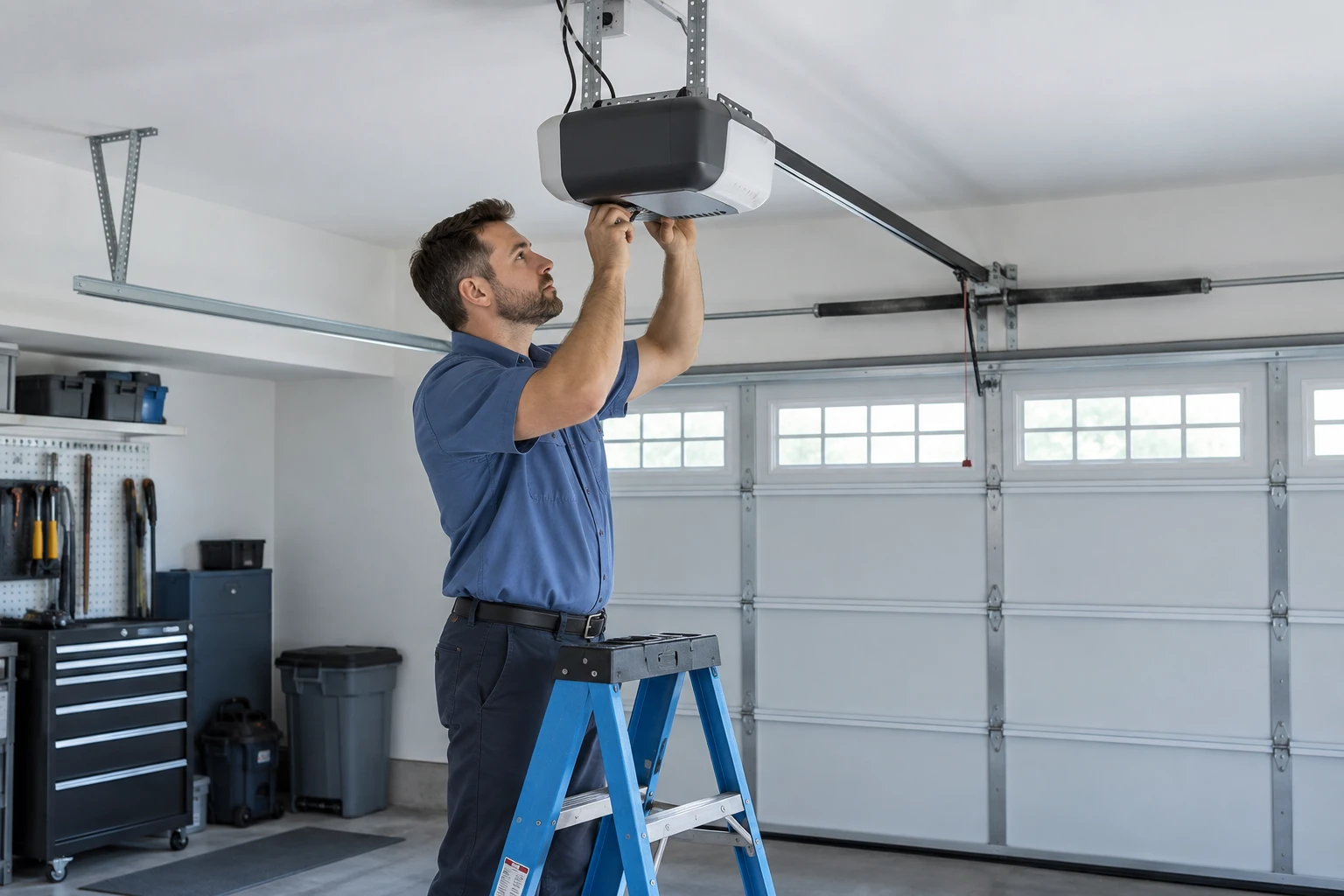
Fort Worth's housing variety produces unusually different opener installations. Fairmount detached garages may have short ceilings, exposed rafters, and limited electrical access. Ranch houses in Wedgwood and Ridglea often retain older chain drive openers mounted to long, solid double doors. Tanglewood garages commonly sit below or beside living areas, making vibration and rail noise especially noticeable. New growth around Alliance, Chisholm Trail Parkway, and far west Fort Worth brings insulated doors, wireless controls, battery backup features, and side mounted openers. Expansive clay can alter the opening enough to make a door rub, which an opener may misinterpret as an obstruction. Spring storms cause power interruptions and sensor contamination, while summer heat builds beneath garage ceilings where control boards and capacitors operate. Heavy commuting across the city also means household doors complete many daily cycles, accelerating wear on gears, belts, chains, trolleys, and travel assemblies.
Warning signs of a opener repair problem
Opener trouble has several recognizable patterns. A motor that runs while the door stays still may have a stripped gear, broken belt, disconnected trolley, or failed spring. Reversal near the floor points toward photo eye interruption, excessive mechanical resistance, or an incorrect close limit. Clicking without movement can indicate a control, capacitor, or motor problem. A chain that sags, slaps the rail, or leaves dark debris needs inspection. Belt material may fray or shed teeth, while a screw drive can chatter when dry or worn. Intermittent remotes may reflect batteries, radio interference, antenna damage, or a failing receiver. Burning odor, visible smoke, repeated breaker trips, or a hot housing requires immediate shutdown. On Fort Worth doors beneath bedrooms, new vibration can signal loose ceiling supports or rough door hardware rather than a bad motor alone.
What actually causes it
Openers fail when electrical, drive, or control components wear out, but overload is a leading contributor. If springs no longer balance the door, the motor, gear set, trolley, and top bracket absorb force they were not designed to carry. Bent tracks, damaged rollers, swollen trim, or clay related opening movement can create similar resistance. Chain and belt systems also wear through normal cycling. Travel modules lose position, limit components drift, and control boards can suffer from age, heat, moisture, or power disturbances. Fort Worth thunderstorms create outages and surges that may damage low voltage controls. Sunlight can interfere with a poorly positioned photo eye on a west facing opening. Stored items, cobwebs, and construction dust interrupt the sensor beam. Side mounted units may report cable tension or position faults when the underlying door or shaft does not move evenly.
What the Fort Worth visit looks like
Diagnosis starts with the garage door, not the motor housing. Springs, cables, rollers, hinges, tracks, and section condition are inspected before the opener is asked to move anything. When safe, the opener is disconnected and the door is tested manually for balance and smooth travel. The technician then checks power, wall controls, remote response, photo eye alignment, low voltage wiring, rail support, drive components, trolley, and top section attachment. Error lights or stored fault information are interpreted in context rather than used as the only answer. The homeowner receives an explanation of the actual failure and whether repair or replacement is more reasonable. Approved work may include correcting wiring, replacing a drive component, installing sensors, securing supports, resetting travel, or changing the opener. Afterward, open and close limits are set without pressing the door excessively into the floor. Force response, photo eye interruption, manual release, remote controls, and automatic reversal are tested. The final check confirms that the door moves smoothly without the motor masking a mechanical defect.
The parts that matter
The important opener parts include the motor, control board, capacitor, gear and sprocket assembly, belt or chain, trolley, rail, travel module, photo eyes, wall station, receiver, antenna, and emergency release. Replacement parts must match the unit's manufacturer, model family, rail type, and production design. A gear that fits the shaft but uses the wrong tooth profile will not provide dependable travel. Belts and chains require the correct length for the rail and door height. Photo eyes must be compatible with the control logic, not merely similar in appearance. For a new unit, door weight is handled by springs, so motor choice should reflect door size, cycle frequency, speed, noise needs, and accessory features rather than raw lifting claims. Fort Worth garages with living space nearby often benefit from quieter drive and roller combinations. Side mounted openers require a compatible torsion shaft, adequate side clearance, and controlled cable tension.
What moves the price in Fort Worth
Opener repair cost depends on the failed component, unit type, parts availability, rail condition, controls, and whether the door has a separate mechanical problem. Replacing a wall station or sensor pair is different from rebuilding a damaged gear assembly. A discontinued control board may make replacement more practical than extensive repair. Belt drive and side mounted systems can use model specific components, while basic chain units are often simpler. Additional work is required if an unbalanced door has bent the rail, torn the top bracket, or damaged the trolley. High ceilings, finished garage surfaces, overhead storage, and difficult electrical access affect labor. In Fort Worth historic districts, detached structures may have unusual mounting conditions. The estimate should separate door repair from opener work and explain which features are necessary, optional, or incompatible with the existing setup.
The mistake that costs the most
The most common mistake is increasing the force setting whenever a Fort Worth door reverses or stalls. That adjustment can hide worn rollers, incorrect spring balance, floor contact, or a blocked sensor while reducing the opener's ability to respond safely to resistance. Another mistake is replacing the motor unit without checking the rail, door hardware, and top section. A new opener connected to a heavy or binding door can suffer the same damage quickly. Homeowners also bypass photo eyes when sunlight or alignment causes intermittent closing. That removes an important protection instead of fixing positioning, wiring, or mechanical travel. Cheap replacement work may reuse a loose ceiling mount or attach the opener bracket to thin panel skin. Reliable operation requires a sound door, secure support, compatible controls, and correct limit setup.
Opener Repair problem in Fort Worth?
Describe what the door is doing and you will get a straight read on what is likely wrong, whether it is safe to leave until tomorrow, and what the repair actually involves.
Call (214) 271-8110Questions from Fort Worth homeowners
Why does my Fort Worth opener close the door and then reverse?
The opener may be reaching the floor before its control expects, sensing resistance from a stiff seal, or responding to misaligned photo eyes. An uneven slab caused by local soil movement can also make one corner contact early. Clean obvious debris and check that nothing blocks the sensor beam, but do not increase force or bypass safety equipment. The door should be inspected manually for binding and balance. Travel limits can be reset only after the mechanical system, bottom seal, sensor position, and floor contact have been evaluated together.
Should I repair my old chain drive opener or replace it?
Repair can make sense when the motor, rail, safety system, and major controls remain sound and the failed part is available. Replacement becomes more practical when several components are worn, the unit lacks dependable photo eye protection, the control board is unavailable, or repeated overload has damaged the rail and drive. Noise alone is also worth separating from roller or door vibration. In a Fort Worth home with a bedroom near the garage, a quieter system may add value, but only after the door itself has been balanced and repaired.
Why do my opener remotes work only from inside the garage?
Weak remote batteries, a damaged antenna, receiver trouble, radio interference, or certain nearby electronics can reduce range. Fort Worth homes may contain wireless lighting, chargers, security equipment, or LED bulbs that interfere with the opener's signal. Test approved bulbs and remove recently added electronics one item at a time, but do not alter the antenna or control board casually. If every remote behaves the same way, the receiver or environmental interference becomes more likely. Wall control operation, remote programming, antenna condition, and compatible replacement options should be checked systematically.
Other garage door work we do in Fort Worth
Test the door by hand: Fort Worth Garage Door Opener Repair in Dallas-Fort Worth
The final test matters as much as the first inspection. For Fort Worth Garage Door Opener Repair in Dallas-Fort Worth, the local context includes a mix of property ages, operating patterns, weather exposure, shared access, and equipment histories. The working scope centers on inspection, diagnosis, scope, safe work, operational testing, and a documented handoff. Under test the door by hand, the review covers door balance, spring assistance, roller movement, hinge condition, track alignment, and resistance through the full travel. A property manager may first report that the photo-eye circuit needs a documented baseline, but that statement is a starting point rather than a diagnosis. The inspection should establish what changed, which parts still function, what can be tested safely, and what result the customer expects. The technician can then explain what belongs in the current job and what can wait. Conditions across Dallas-Fort Worth influence materials, access, weather exposure, and scheduling, so the final recommendation should follow the actual property. 24/7 Dallas Garage Door Repair explains the work, records important limitations, and asks the customer to verify the finished operation before the visit closes.
A reliable plan begins with a physical check. For Fort Worth Garage Door Opener Repair in Dallas-Fort Worth, the local context includes a mix of property ages, operating patterns, weather exposure, shared access, and equipment histories. The working scope centers on inspection, diagnosis, scope, safe work, operational testing, and a documented handoff. Under test the door by hand, the review covers door balance, spring assistance, roller movement, hinge condition, track alignment, and resistance through the full travel. A homeowner may first report that the bottom fixture behaves differently under load, but that statement is a starting point rather than a diagnosis. The inspection should establish what changed, which parts still function, what can be tested safely, and what result the customer expects. This prevents one worn part from hiding a larger operating problem. Conditions across Dallas-Fort Worth influence materials, access, weather exposure, and scheduling, so the final recommendation should follow the actual property. 24/7 Dallas Garage Door Repair explains the work, records important limitations, and asks the customer to verify the finished operation before the visit closes.
Plan for weather: Fort Worth Garage Door Opener Repair in Dallas-Fort Worth
A reliable plan begins with a physical check. For Fort Worth Garage Door Opener Repair in Dallas-Fort Worth, the local context includes a mix of property ages, operating patterns, weather exposure, shared access, and equipment histories. The working scope centers on inspection, diagnosis, scope, safe work, operational testing, and a documented handoff. Under plan for weather, the review covers heat, cold, wind, moisture, seal condition, material movement, lubrication needs, and exposed metal. A warehouse lead may first report that the spring shaft shows uneven wear, but that statement is a starting point rather than a diagnosis. The inspection should establish what changed, which parts still function, what can be tested safely, and what result the customer expects. This prevents one worn part from hiding a larger operating problem. Conditions across Dallas-Fort Worth influence materials, access, weather exposure, and scheduling, so the final recommendation should follow the actual property. 24/7 Dallas Garage Door Repair explains the work, records important limitations, and asks the customer to verify the finished operation before the visit closes.
The final test matters as much as the first inspection. For Fort Worth Garage Door Opener Repair in Dallas-Fort Worth, the local context includes a mix of property ages, operating patterns, weather exposure, shared access, and equipment histories. The working scope centers on inspection, diagnosis, scope, safe work, operational testing, and a documented handoff. Under plan for weather, the review covers heat, cold, wind, moisture, seal condition, material movement, lubrication needs, and exposed metal. A building owner may first report that the cable drum has been exposed to moisture, but that statement is a starting point rather than a diagnosis. The inspection should establish what changed, which parts still function, what can be tested safely, and what result the customer expects. The technician can then explain what belongs in the current job and what can wait. Conditions across Dallas-Fort Worth influence materials, access, weather exposure, and scheduling, so the final recommendation should follow the actual property. 24/7 Dallas Garage Door Repair explains the work, records important limitations, and asks the customer to verify the finished operation before the visit closes.
A useful question before approving this step
Ask what observation supports the recommendation, which parts are included, which parts are outside the scope, how the result will be tested, and what documentation you will receive. Call (214) 271-8110 to describe the property and schedule work within Dallas-Fort Worth.
Explain the quote: Fort Worth Garage Door Opener Repair in Dallas-Fort Worth
Small alignment and maintenance details often explain large symptoms. For Fort Worth Garage Door Opener Repair in Dallas-Fort Worth, the local context includes a mix of property ages, operating patterns, weather exposure, shared access, and equipment histories. The working scope centers on inspection, diagnosis, scope, safe work, operational testing, and a documented handoff. Under explain the quote, the review covers diagnosis, parts, labor, optional work, approval, testing, and what would change the scope. A building owner may first report that the opener rail has an uncertain service history, but that statement is a starting point rather than a diagnosis. The inspection should establish what changed, which parts still function, what can be tested safely, and what result the customer expects. That sequence keeps the recommendation tied to evidence. Conditions across Dallas-Fort Worth influence materials, access, weather exposure, and scheduling, so the final recommendation should follow the actual property. 24/7 Dallas Garage Door Repair explains the work, records important limitations, and asks the customer to verify the finished operation before the visit closes.
Good service starts by separating cause from coincidence. For Fort Worth Garage Door Opener Repair in Dallas-Fort Worth, the local context includes a mix of property ages, operating patterns, weather exposure, shared access, and equipment histories. The working scope centers on inspection, diagnosis, scope, safe work, operational testing, and a documented handoff. Under explain the quote, the review covers diagnosis, parts, labor, optional work, approval, testing, and what would change the scope. A homeowner may first report that the sectional door serves several users, but that statement is a starting point rather than a diagnosis. The inspection should establish what changed, which parts still function, what can be tested safely, and what result the customer expects. That distinction matters when several people share responsibility for the property. Conditions across Dallas-Fort Worth influence materials, access, weather exposure, and scheduling, so the final recommendation should follow the actual property. 24/7 Dallas Garage Door Repair explains the work, records important limitations, and asks the customer to verify the finished operation before the visit closes.
Trace uneven movement: Fort Worth Garage Door Opener Repair in Dallas-Fort Worth
A careful scope protects both the equipment and the customer. For Fort Worth Garage Door Opener Repair in Dallas-Fort Worth, the local context includes a mix of property ages, operating patterns, weather exposure, shared access, and equipment histories. The working scope centers on inspection, diagnosis, scope, safe work, operational testing, and a documented handoff. Under trace uneven movement, the review covers cable seating, drums, bottom fixtures, track spacing, rollers, and obstructions around the opening. A technician may first report that the bottom fixture behaves differently under load, but that statement is a starting point rather than a diagnosis. The inspection should establish what changed, which parts still function, what can be tested safely, and what result the customer expects. It also gives the customer a clear way to compare the available options. Conditions across Dallas-Fort Worth influence materials, access, weather exposure, and scheduling, so the final recommendation should follow the actual property. 24/7 Dallas Garage Door Repair explains the work, records important limitations, and asks the customer to verify the finished operation before the visit closes.
The visible symptom is only the first clue. For Fort Worth Garage Door Opener Repair in Dallas-Fort Worth, the local context includes a mix of property ages, operating patterns, weather exposure, shared access, and equipment histories. The working scope centers on inspection, diagnosis, scope, safe work, operational testing, and a documented handoff. Under trace uneven movement, the review covers cable seating, drums, bottom fixtures, track spacing, rollers, and obstructions around the opening. A building owner may first report that the photo-eye circuit needs a documented baseline, but that statement is a starting point rather than a diagnosis. The inspection should establish what changed, which parts still function, what can be tested safely, and what result the customer expects. The result is easier to test and easier to document. Conditions across Dallas-Fort Worth influence materials, access, weather exposure, and scheduling, so the final recommendation should follow the actual property. 24/7 Dallas Garage Door Repair explains the work, records important limitations, and asks the customer to verify the finished operation before the visit closes.
Review everyday use: Fort Worth Garage Door Opener Repair in Dallas-Fort Worth
Every property adds a different operating pattern. For Fort Worth Garage Door Opener Repair in Dallas-Fort Worth, the local context includes a mix of property ages, operating patterns, weather exposure, shared access, and equipment histories. The working scope centers on inspection, diagnosis, scope, safe work, operational testing, and a documented handoff. Under review everyday use, the review covers vehicles, storage, children, pets, deliveries, work schedules, noise, and the need for backup entry. A building owner may first report that the photo-eye circuit needs a documented baseline, but that statement is a starting point rather than a diagnosis. The inspection should establish what changed, which parts still function, what can be tested safely, and what result the customer expects. This approach keeps safety, function, and cost in the same conversation. Conditions across Dallas-Fort Worth influence materials, access, weather exposure, and scheduling, so the final recommendation should follow the actual property. 24/7 Dallas Garage Door Repair explains the work, records important limitations, and asks the customer to verify the finished operation before the visit closes.
Clear documentation makes a technical job easier to judge. For Fort Worth Garage Door Opener Repair in Dallas-Fort Worth, the local context includes a mix of property ages, operating patterns, weather exposure, shared access, and equipment histories. The working scope centers on inspection, diagnosis, scope, safe work, operational testing, and a documented handoff. Under review everyday use, the review covers vehicles, storage, children, pets, deliveries, work schedules, noise, and the need for backup entry. A technician may first report that the bottom fixture behaves differently under load, but that statement is a starting point rather than a diagnosis. The inspection should establish what changed, which parts still function, what can be tested safely, and what result the customer expects. The same check helps rule out work that would not solve the complaint. Conditions across Dallas-Fort Worth influence materials, access, weather exposure, and scheduling, so the final recommendation should follow the actual property. 24/7 Dallas Garage Door Repair explains the work, records important limitations, and asks the customer to verify the finished operation before the visit closes.
A useful question before approving this step
Ask what observation supports the recommendation, which parts are included, which parts are outside the scope, how the result will be tested, and what documentation you will receive. Call (214) 271-8110 to describe the property and schedule work within Dallas-Fort Worth.
Separate door and opener: Fort Worth Garage Door Opener Repair in Dallas-Fort Worth
The safest next step comes from controlled testing. For Fort Worth Garage Door Opener Repair in Dallas-Fort Worth, the local context includes a mix of property ages, operating patterns, weather exposure, shared access, and equipment histories. The working scope centers on inspection, diagnosis, scope, safe work, operational testing, and a documented handoff. Under separate door and opener, the review covers manual movement, trolley release, motor effort, travel settings, force settings, and the symptom that started the call. A technician may first report that the bottom fixture behaves differently under load, but that statement is a starting point rather than a diagnosis. The inspection should establish what changed, which parts still function, what can be tested safely, and what result the customer expects. A complete handoff shows what changed and how to verify it. Conditions across Dallas-Fort Worth influence materials, access, weather exposure, and scheduling, so the final recommendation should follow the actual property. 24/7 Dallas Garage Door Repair explains the work, records important limitations, and asks the customer to verify the finished operation before the visit closes.
The most useful decision follows the system, not a sales package. For Fort Worth Garage Door Opener Repair in Dallas-Fort Worth, the local context includes a mix of property ages, operating patterns, weather exposure, shared access, and equipment histories. The working scope centers on inspection, diagnosis, scope, safe work, operational testing, and a documented handoff. Under separate door and opener, the review covers manual movement, trolley release, motor effort, travel settings, force settings, and the symptom that started the call. A property manager may first report that the cable drum has been exposed to moisture, but that statement is a starting point rather than a diagnosis. The inspection should establish what changed, which parts still function, what can be tested safely, and what result the customer expects. A written scope also reduces surprises after work begins. Conditions across Dallas-Fort Worth influence materials, access, weather exposure, and scheduling, so the final recommendation should follow the actual property. 24/7 Dallas Garage Door Repair explains the work, records important limitations, and asks the customer to verify the finished operation before the visit closes.
Match parts to the door: Fort Worth Garage Door Opener Repair in Dallas-Fort Worth
The most useful decision follows the system, not a sales package. For Fort Worth Garage Door Opener Repair in Dallas-Fort Worth, the local context includes a mix of property ages, operating patterns, weather exposure, shared access, and equipment histories. The working scope centers on inspection, diagnosis, scope, safe work, operational testing, and a documented handoff. Under match parts to the door, the review covers weight, height, track radius, headroom, shaft layout, manufacturer details, and compatible replacement hardware. A installer may first report that the opener rail has an uncertain service history, but that statement is a starting point rather than a diagnosis. The inspection should establish what changed, which parts still function, what can be tested safely, and what result the customer expects. A written scope also reduces surprises after work begins. Conditions across Dallas-Fort Worth influence materials, access, weather exposure, and scheduling, so the final recommendation should follow the actual property. 24/7 Dallas Garage Door Repair explains the work, records important limitations, and asks the customer to verify the finished operation before the visit closes.
The safest next step comes from controlled testing. For Fort Worth Garage Door Opener Repair in Dallas-Fort Worth, the local context includes a mix of property ages, operating patterns, weather exposure, shared access, and equipment histories. The working scope centers on inspection, diagnosis, scope, safe work, operational testing, and a documented handoff. Under match parts to the door, the review covers weight, height, track radius, headroom, shaft layout, manufacturer details, and compatible replacement hardware. A warehouse lead may first report that the bottom fixture behaves differently under load, but that statement is a starting point rather than a diagnosis. The inspection should establish what changed, which parts still function, what can be tested safely, and what result the customer expects. A complete handoff shows what changed and how to verify it. Conditions across Dallas-Fort Worth influence materials, access, weather exposure, and scheduling, so the final recommendation should follow the actual property. 24/7 Dallas Garage Door Repair explains the work, records important limitations, and asks the customer to verify the finished operation before the visit closes.
Complete the handoff: Fort Worth Garage Door Opener Repair in Dallas-Fort Worth
Clear documentation makes a technical job easier to judge. For Fort Worth Garage Door Opener Repair in Dallas-Fort Worth, the local context includes a mix of property ages, operating patterns, weather exposure, shared access, and equipment histories. The working scope centers on inspection, diagnosis, scope, safe work, operational testing, and a documented handoff. Under complete the handoff, the review covers manual release, remote controls, keypad access, safety tests, maintenance notes, and ownership of connected accounts. A warehouse lead may first report that the sectional door serves several users, but that statement is a starting point rather than a diagnosis. The inspection should establish what changed, which parts still function, what can be tested safely, and what result the customer expects. The same check helps rule out work that would not solve the complaint. Conditions across Dallas-Fort Worth influence materials, access, weather exposure, and scheduling, so the final recommendation should follow the actual property. 24/7 Dallas Garage Door Repair explains the work, records important limitations, and asks the customer to verify the finished operation before the visit closes.
Every property adds a different operating pattern. For Fort Worth Garage Door Opener Repair in Dallas-Fort Worth, the local context includes a mix of property ages, operating patterns, weather exposure, shared access, and equipment histories. The working scope centers on inspection, diagnosis, scope, safe work, operational testing, and a documented handoff. Under complete the handoff, the review covers manual release, remote controls, keypad access, safety tests, maintenance notes, and ownership of connected accounts. A installer may first report that the opener rail has an uncertain service history, but that statement is a starting point rather than a diagnosis. The inspection should establish what changed, which parts still function, what can be tested safely, and what result the customer expects. This approach keeps safety, function, and cost in the same conversation. Conditions across Dallas-Fort Worth influence materials, access, weather exposure, and scheduling, so the final recommendation should follow the actual property. 24/7 Dallas Garage Door Repair explains the work, records important limitations, and asks the customer to verify the finished operation before the visit closes.
A useful question before approving this step
Ask what observation supports the recommendation, which parts are included, which parts are outside the scope, how the result will be tested, and what documentation you will receive. Call (214) 271-8110 to describe the property and schedule work within Dallas-Fort Worth.